Practical guide · Trifaar studio
Why Booking Apps Double-Book—and How to Prevent It
How atomic reservations, resource constraints, payment states, idempotency, time zones, and calendar reconciliation make appointment systems dependable.
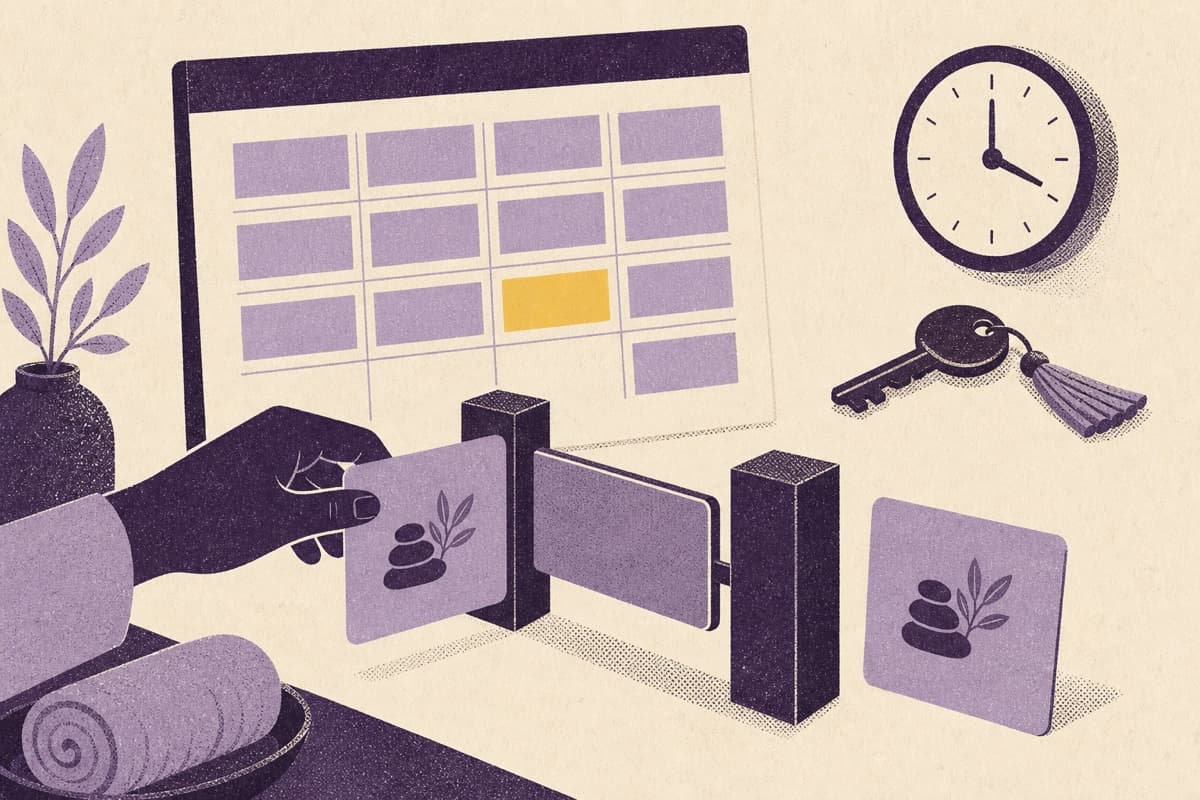
Two customers open the same appointment slot. Both see it as available. Both press confirm. The system checks the calendar twice, finds no existing booking twice, and saves two appointments.
Nothing needs to be unusually slow for this to happen. The mistake is treating “check availability” and “reserve capacity” as one operation when they are actually separate.
A dependable booking product must protect the business rule at the point where the reservation is committed.
A calendar view is not a reservation guarantee
Availability is a snapshot. It can become outdated between display and confirmation.
The backend needs an atomic way to accept one reservation and reject a conflicting one. Disabling the button after a click improves the interface but does not stop another browser, integration, or staff account from making the same booking.
For fixed slots, a suitable unique database constraint can enforce single occupancy. Variable-duration appointments need an overlap rule, not just uniqueness on the start time. PostgreSQL's range documentation describes exclusion constraints that can prevent overlapping reservations for the same resource. The database is one implementation option; the important property is that concurrent writes cannot both violate the rule.
Model what the appointment consumes
A spa appointment may require a therapist, treatment room, equipment, and preparation time. A booking is valid only if the necessary resources are available together.
Write down the resource rules before choosing a calendar component:
- Which staff can perform the service?
- Does the customer choose a staff member or accept any qualified person?
- Is a room or device required?
- How much setup and cleanup time blocks the resource?
- Can appointments overlap during unattended portions of a service?
- Does capacity change by site, day, or service type?
Multiple-resource reservations should be committed consistently. Taking the therapist but failing to reserve the room leaves a half-booking that someone must repair.
Payments introduce a second state machine
Do not use one boolean called confirmed to represent both a reservation and a payment.
A clearer flow distinguishes a temporary hold, payment pending, confirmed booking, expired hold, cancellation, and refund status. The exact sequence depends on the business, but the failure cases must be deliberate.
Suppose a hold expires while a payment confirmation is delayed. Should the platform reclaim the slot if still available, offer an alternative, or refund the payment? Decide before launch. A successful payment does not magically recreate capacity that was released and sold to someone else.
Use stable operation identifiers when retrying payment requests. Stripe's idempotency documentation explains how an idempotency key allows a request to be retried without creating the same operation again. That protection does not replace the booking database's own reservation rules.
Webhook handlers also need signature verification, deduplication, and state-aware processing. Stripe documents that events may be duplicated and are not guaranteed to arrive in generation order. Reconcile payment state server-side rather than treating the browser's return to a success page as proof of payment.
Time zones are business data
Store the appointment's actual instant and preserve the relevant named time zone. For recurring availability, keep the intended local schedule as well. “Every Monday at 9 a.m.” is not necessarily the same as adding seven times 24 hours to a UTC timestamp across daylight-saving changes.
Use IANA zone identifiers such as America/New_York, not a fixed offset as a permanent substitute. Google Calendar's documentation explains time-zone handling and the zone used to expand recurring events.
Show the location's appointment time clearly to customers booking while traveling. Test ambiguous and nonexistent local times around daylight-saving transitions, and decide how the system resolves them.
External calendars need reconciliation
If staff can block time in another calendar, synchronization becomes part of availability—not an optional visual enhancement.
Define the source of truth, direction of synchronization, and conflict policy. Track external event identifiers so an update does not create a new booking. Make failed synchronization visible to staff and periodically reconcile state after missed notifications or expired credentials.
Do not promise immediate cross-system consistency unless the architecture actually provides it. A short delay can be acceptable if the product handles the resulting conflict honestly.
Test the cases reception staff will face
Run concurrent requests for the same slot. Retry after a timeout. Deliver the same payment event twice. Cancel while a reschedule is in progress. Remove a staff member's availability after customers have booked. Simulate a payment arriving after a hold expires.
The expected outcome should include the customer's message, the staff view, and the financial state—not only the HTTP response.
How Trifaar can help
Smart360 began with Rob's need for a customized spa platform that addressed gaps in an existing product category. Booking reliability is a central engineering concern for that kind of business; the techniques above are recommended design patterns, not a disclosure of Smart360's implementation.
Trifaar's backend and API service can help define reservation invariants, payment states, calendar integrations, and concurrency tests. Our SaaS engineering service connects those controls to a booking experience customers and staff can understand.
Ask Trifaar to review your booking flow. Start with the last conflict your staff had to fix manually. It often reveals the missing rule faster than another feature list.